

The science of doodling
Far from being a sign of distraction, doodling is proven by cognitive research to anchor focus and boost information retention. If your workmate is doodling at your next meeting, there is a good chance they are not trying to be disrespectful!.
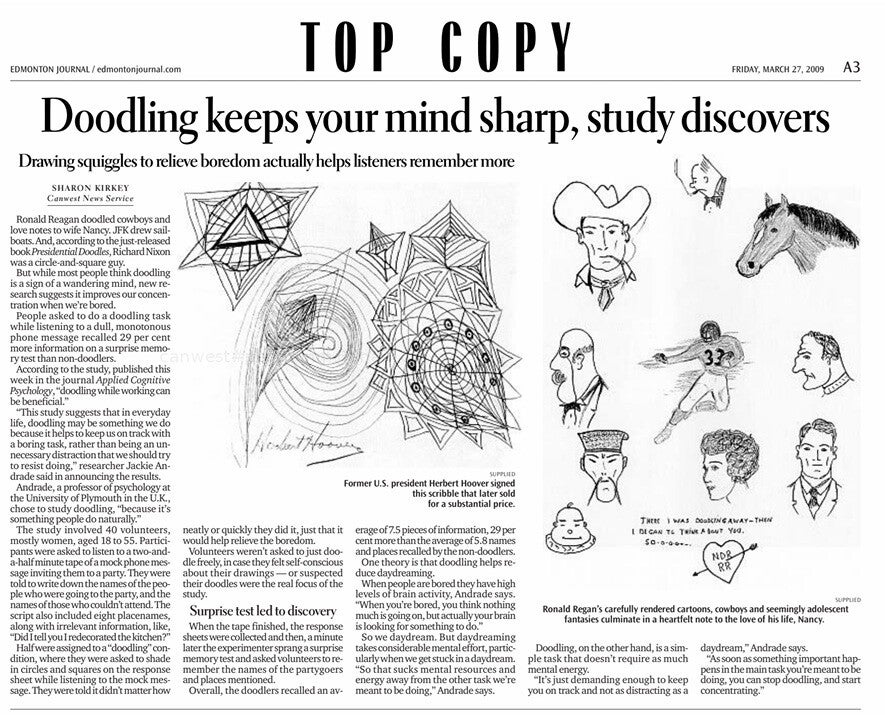
You know you're bored when you start shading in the squares of your notebook. Apparently it's a habit that could be helping you to concentrate. In a neat little experiment, Jackie Andrade asked forty participants to listen to a monotone two and a half minute phone message about arrangements for a party. They were told the message would be dull, that there was no need to memorise it, but that they should write down the names of the people who would be able to attend the party. Crucially, half the participants were also told to 'doodle' as they listened, by shading in the squares and circles of their note paper.
Afterwards, the doodlers had noted fractionally more of the correct names (7.8 on average vs. 7.1 – a statistically significant difference). What's more, moments later, the doodlers also excelled in a surprise memory test of the guests' names and the places mentioned in the message, recalling 29 per cent more details than the non-doodlers.
Further reading
Andrade, J. (2010). What does doodling do? Applied Cognitive Psychology, 24 (1), 100-106 DOI: 10.1002/acp.1561
A fresh appreciation for the doodle
Next time you see someone doodling in the margins of a notebook, recognize it for what it truly is: a powerful cognitive tool at work. Doodling actually helps us pay attention!